7 Benefits of Hoarding Advertising That Make It One of India's Most Powerful Brand Tools
Your boss or client just asked: "Why not just run Google Ads?" It is a fair question. This article gives you a clear, simple answer — with numbers to back it up.
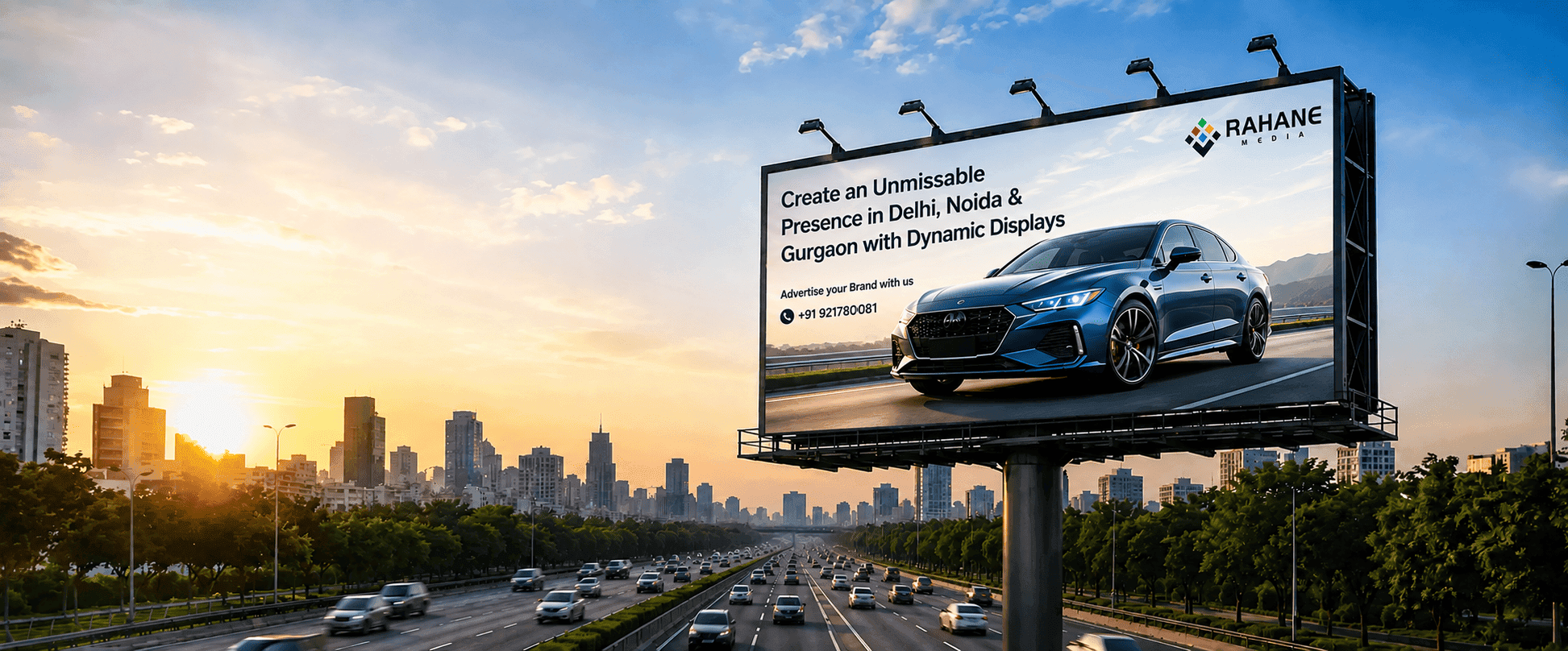
Today, brands fight for attention on Instagram, YouTube, Google, and WhatsApp all at once. Yet one of the most remembered ad formats in India is still a big board at a busy crossing. Nearly 50% of all outdoor advertising in India uses hoardings — and big brands keep coming back to this format every year.
Below, we explain the seven real benefits of hoarding advertising and answer the questions most people have before they invest.
1. People Cannot Ignore a Hoarding
This is the biggest thing that makes hoarding advertising different from digital ads. A Facebook ad gets skipped. A YouTube ad gets skipped after 5 seconds. A banner ad on a website gets ignored. But a hoarding is right there in front of you — you cannot close it or scroll past it.
Most people are tired of seeing ads online. They have learned to look past them without even realising it. A hoarding on the road, on the other hand, stands out. It feels real. It is hard to miss.
Think about this: a hoarding passes in front of a person in about 3 seconds when they are driving at 40 kmph. A good hoarding says everything it needs to say in those 3 seconds — one clear message, one strong image. That kind of focus is what makes great outdoor ads.
Some of the most memorable ad campaigns in India used hoardings. Amul puts up new boards every week to talk about news and events — people look forward to seeing them. McDonald's India once put up a board that changed its message based on how much traffic there was. Bisleri used hoardings to remind people that not every water bottle is as safe as theirs. These campaigns worked because the hoarding was impossible to ignore.
2. One Hoarding Reaches Thousands of People Every Day
A hoarding at a busy crossing does not reach a few hundred people. It reaches tens of thousands — every single day — without you spending anything extra after booking it.
Here is something digital ads cannot do: a person who drives past the same hoarding every day for three months sees your brand about 60 times — and you do not pay extra for any of those views after the initial booking. Every time they pass it, your brand gets a little more familiar to them.
When that person eventually needs to buy something in your category, your brand is the first one that comes to mind — not because of one great ad, but because they have seen your name dozens of times on the way to work.
3. People Remember Hoarding Ads More Than Other Ads
If there is one number to share with anyone asking whether hoardings are worth it, this is it: 70% of people remember seeing a hoarding ad, compared to just 40% for other types of advertising. That comes from a Nielsen study — one of the biggest research companies in the world.
Why does this happen? Because seeing the same board again and again over weeks and months makes your brain store that brand. You do not have to actively pay attention. It just sticks — the same way you remember a shop name you drive past every day, even if you have never been inside.
4. You Can Target a Specific Area — Not Just a Whole City
Many people think hoardings are only for big brands that want to cover an entire city. That is not true. When you book a hoarding, you are choosing a specific spot — one junction, one road, one area. This means you can reach exactly the right people, in exactly the right place.
Here is how different types of businesses use this:
Restaurants and shops: book a hoarding within 2–3 km of your location to bring in customers from the surrounding area
Real estate projects: put up 5–6 boards around the area where your project is, so everyone nearby keeps seeing your name — even without a big national budget
New brands: book spots near competitor stores to get in front of people who are already interested in your type of product
Schools, clinics, and hospitals: build trust in your local area by appearing on roads that your target families and patients use every day
When people see your board near their home or office, it does not feel like an ad — it feels like your brand belongs in their neighbourhood. That feeling is very hard to create with digital ads alone.
5. Your Hoarding Works All Day and All Night
A digital ad campaign stops the moment your budget runs out. The hoarding does not stop. It keeps running — day and night, weekdays and weekends, on public holidays, through power cuts to your laptop. Once it is up, it works without you doing anything.
Boards with backlighting or LED panels keep working after dark too. In cities like Mumbai, Delhi, and Bengaluru, evening foot traffic in market areas is often as busy as the morning rush. A lit hoarding is promoting your brand even when your office is closed.
6. A Big Hoarding Makes Your Brand Look Established and Trustworthy
There is something about size that cannot be faked. When people see a brand on a large board at a busy crossing, they think: this brand has money, this brand is real, this brand is not going anywhere. That kind of trust is very hard to build through a small Instagram post or a Google ad.
This is why brands use hoardings not just to sell, but to build their image. Cadbury India uses large festive hoardings during Diwali and Raksha Bandhan — big, colourful boards that feel like a part of the festival season. People do not feel like they are looking at an ad. They feel like the brand is part of the celebration.
LED hoardings let you rotate different designs on the same board — one day you show a product, the next day you show an offer, the day after you share a customer story. This keeps things fresh while your brand stays visible in the same spot day after day.
7. Hoardings Make Your Other Ads Work Better Too
A lot of people think it is a choice between hoardings and digital ads. It is not. The two work best together.
Here is how it works: someone sees your hoarding on the way to work. Later that day, they see your ad on Instagram. Because they already recognise your brand from the hoarding, they are much more likely to stop and pay attention to the Instagram ad. The hoarding did the hard work of making your brand familiar — the digital ad just needs to close the deal.
You can also make hoardings easier to measure by adding a QR code or a short web link on the board. When someone scans it, you know the hoarding brought them in. That turns your hoarding into something you can track, not just something you hope is working.
Which Businesses Benefit Most From Hoarding Advertising?
While hoardings work for most businesses, these categories tend to get the most out of them:
Real estate and construction — for project launches and building awareness in the local area. A few well-placed boards near the project site make buyers feel the brand is everywhere.
Shops and restaurants — for bringing more customers through the door. A hoarding close to your location works like a giant signpost that never stops pointing people your way.
FMCG and consumer goods — for festive campaigns and product launches. The high recall rate means people remember the brand when they are shopping, weeks after seeing the board.
Schools and hospitals — for building trust in the local community. Families and patients are more comfortable choosing a brand they have seen nearby for a long time.
New businesses and startups — for building credibility fast. When a brand that people only know from an app suddenly appears on a big board at a busy junction, it becomes real and trustworthy in a way that digital ads rarely achieve alone.
What Makes a Good Hoarding Ad? 5 Simple Rules
Say one thing only. People pass your board in 3 seconds. Pick one message and say it clearly. Trying to say three things at once means people remember nothing.
Use big, readable text. Your font should be easy to read from 50 metres away, in bright sunlight or at night. High contrast between text and background is essential.
Choose the right location. A well-chosen smaller board beats a poorly placed bigger one. A spot where traffic slows down — near a signal or a busy market — gives people more time to read your board.
Run it for at least 4–6 weeks. A very short campaign barely registers. Campaigns of 3 months or more are when people really start to remember the brand. Changing the design every 15 days keeps it fresh without losing the repetition benefit.
Add a QR code or short link. This lets you measure how many people came from the hoarding — turning it from guesswork into trackable results.
Ready to Put Your Brand on India's Streets?
The seven benefits of hoarding advertising covered in this article explain why India's most successful brands keep investing in outdoor ads year after year. People cannot ignore them. They reach thousands every day at a very low cost. 7 out of 10 people remember them. You can target your exact area. They run all day and night. They make your brand look trustworthy. And they make your digital ads perform better too.
At Rahane Media, we help you find the right spots, plan your campaign around your goals, and handle everything from booking to going live — so you can focus on running your business.
Ready to Launch Your
Campaign?
Partner with Rahane Media and take your brand visibility to the next level with outdoor advertising.
Related Blogs
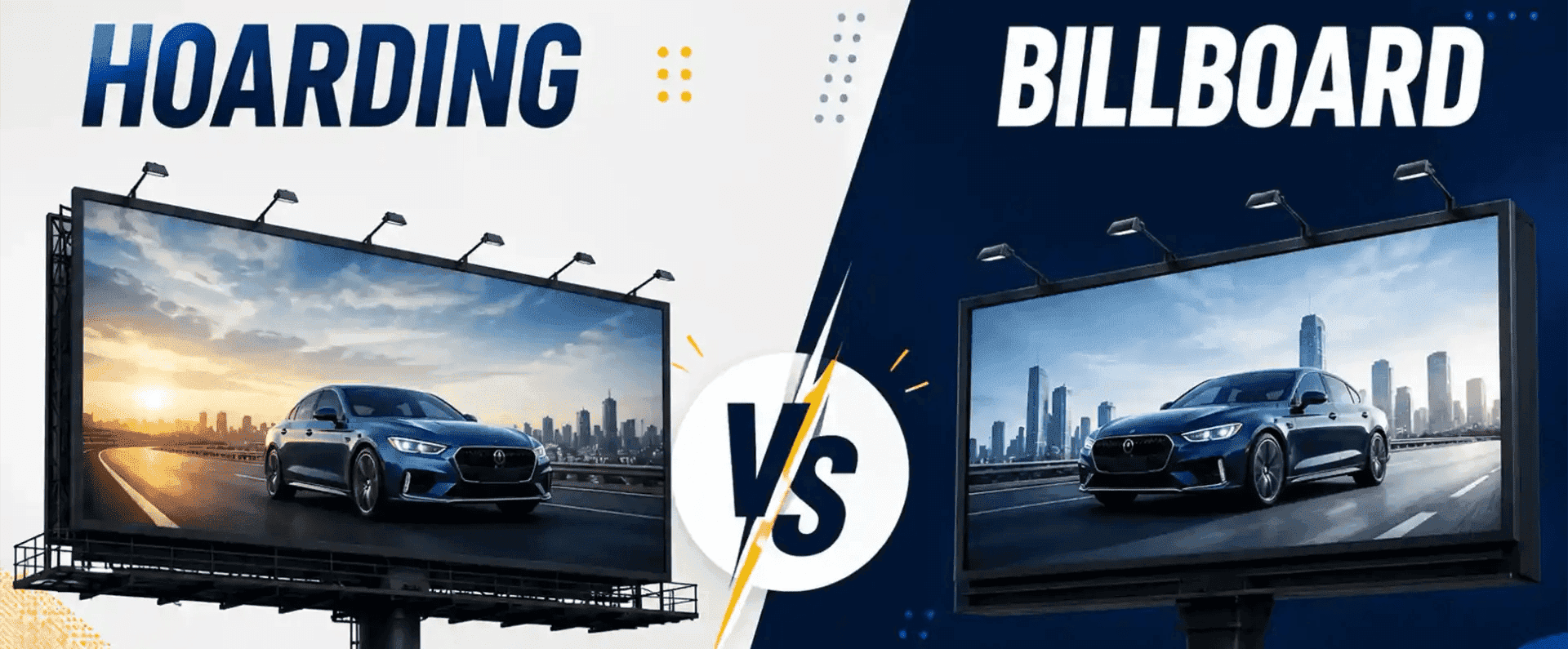
Hoarding vs Billboard: The Complete Guide for Indian Businesses (2026)
Planning an outdoor campaign in India? Before you book a single site, you need to know the difference between a hoarding and a billboard — it could save you lakhs in wasted ad spend.
How to Book Hoarding Advertising in India: A Complete Step-by-Step Guide
Hoarding advertising is a powerful way to increase brand visibility and reach thousands of people daily. This guide covers the key steps to book a hoarding in India and launch a successful campaign.