Hoarding vs Billboard: The Complete Guide for Indian Businesses (2026)
Planning an outdoor campaign in India? Before you book a single site, you need to know the difference between a hoarding and a billboard — it could save you lakhs in wasted ad spend.

If you've been searching for the difference between hoarding and billboard advertising in India, you're likely at a decision point — planning a campaign, allocating a media budget, or advising a client on OOH strategy. This guide cuts through the confusion and gives you a clear, practical breakdown so you can choose the right format, avoid wasted spend, and get measurable results.
Why the Terminology Gets Confusing in India
The terms "hoarding" and "billboard" are often used interchangeably — even by experienced marketers. Part of the reason is geographic: in India and the UK, large outdoor panels have traditionally been called hoardings, while the global (and American) standard term is billboard. But within India's advertising industry today, the two words carry distinct meanings that affect your media planning decisions.
Understanding the hoarding billboard difference isn't just about vocabulary. It directly impacts where your brand appears, who sees it, how much you spend, and whether the format suits your campaign objective.
Hoarding vs Billboard: Definition Breakdown
What Is a Hoarding?
A hoarding is a large-format, static printed advertising panel — typically flex or vinyl — mounted on a metal frame, wall, scaffold, or gantry structure. Hoardings are the most widely used OOH format across Indian cities, towns, and highways.
They are cost-accessible, quick to deploy, and deeply embedded in the way Indian consumers experience brands on the street. A hoarding placed near a busy market, outside a hospital, at a residential colony gate, or above a retail strip commands consistent daily impressions at a fraction of premium media costs.
Hoarding advertising meaning in marketing terms: Using large-format printed panels in high-footfall public locations to build local brand awareness, announce events, drive store footfall, or communicate a campaign message to a mass audience in a defined geography.
What Is a Billboard?
In the Indian context, "billboard" increasingly refers to larger, elevated, often digital formats — unipole structures on highways and expressways, LED digital screens at premium city junctions, illuminated panels at airport approach roads, and rotating displays at metro corridors.
Billboards are designed for mass reach and commuter traffic. They command higher visibility, longer dwell time from passing vehicles, and are typically used for city-wide or national brand campaigns. Digital billboards additionally allow real-time creative updates, dayparting, and multiple brand rotations — making them highly flexible for brands with dynamic messaging needs.
Hoarding vs Billboard: Side-by-Side Comparison
When Should Your Business Choose a Hoarding?
Hoardings deliver the strongest ROI when geographic precision matters more than mass scale. Here are the situations where hoardings are the right call:
Local retail and franchise expansion: Driving footfall to a specific store, outlet, or service centre in a defined catchment area
Real estate projects: Building awareness in the target buyer's locality — residential colonies, IT corridors, educational hubs
Educational institutions: Schools, coaching centres, and colleges targeting families in specific neighbourhoods
Healthcare and diagnostics: Hospitals, clinics, and diagnostic chains building recall in their service radius
FMCG and D2C brands: High-frequency impressions near kirana stores, supermarkets, and purchase touchpoints
Event and activation marketing: Short-duration campaigns with fast turnaround and multiple location coverage
Political and civic campaigns: Ward-level and constituency-specific visibility at scale
The strategic advantage of hoardings: Multiple touchpoints across a city at accessible costs. A brand that places 10–15 well-chosen hoardings across a target area can out-perform a single premium billboard in terms of recall frequency within that geography.
When Should Your Business Choose a Billboard?
Billboards are the right investment when scale, prestige, or commuter reach is your primary objective:
National and regional brand launches: Entering a new market and establishing immediate brand visibility
Automotive, BFSI, and premium consumer brands: Categories where brand stature matters and high-visibility placements reinforce the brand's premium positioning
Highway and inter-city route targeting: Reaching travellers between metros — Mumbai–Pune, Delhi–NCR, Bengaluru–Mysuru corridors
Airport and transit advertising: Targeting high-income, decision-making audiences in transit environments
Digital and tech brands: DOOH billboards support QR-based engagement, contextual messaging, and campaign attribution
Time-sensitive B2B campaigns: Digital billboards near business districts allow messaging aligned with business hours, events, or market developments
Billboard Hoarding Meaning: How Indian Marketers Use Both Together
The most effective OOH strategies in India don't treat hoardings and billboards as an either/or decision. Experienced media planners use them in combination:
The layered approach:
A highway billboard creates the first brand impression for commuters entering a city
Junction and arterial hoardings reinforce the message as the audience moves deeper into the city
Locality-level hoardings near the point of purchase convert awareness into footfall or inquiry
This funnel — from mass reach to hyperlocal conversion — mirrors digital marketing logic and makes your OOH investment measurably more effective.
Does Outdoor Advertising Still Work for B2B Brands in 2026?
Yes — and the data supports it more strongly than most digital-first marketers expect.
India's OOH advertising market is on a significant growth trajectory through 2026, driven by rapid urbanisation, infrastructure expansion (metro corridors, expressways, new airports), and the accelerating adoption of DOOH (Digital Out-of-Home). For B2B brands, this shift matters because:
Decision-makers are commuters. CFOs, procurement heads, and CXOs spend significant time on Indian highways and in metro cities. A well-placed billboard near an SEZ, business park, or airport approach is a high-value B2B touchpoint.
Brand recall compounds. Repeated outdoor exposure builds familiarity and trust — which shortens the B2B sales cycle when a prospect encounters the brand through digital or direct channels.
OOH cannot be blocked or skipped. As ad fatigue increases on digital platforms and ad-blockers become standard, physical outdoor media delivers guaranteed impressions.
DOOH enables data-backed planning. Modern billboard operators in India now offer traffic data, audience movement analytics, and impression-based reporting — making outdoor campaigns more accountable than ever before.
How to Choose the Right Locations for Your Campaign
Location selection is where outdoor campaigns succeed or fail. The right format in the wrong location delivers poor results. Key factors to evaluate:
Traffic volume and quality
Not all high-traffic locations are equal. A hoarding at a premium market junction in South Delhi outperforms one on a less-frequented arterial road in terms of audience quality for certain categories.
Visibility angles and dwell time
A billboard seen for 8 seconds at 80 kmph requires different creative treatment than a hoarding at a signal where vehicles wait for 90 seconds.
Competitive density
Avoid locations cluttered with competitor messaging — unless brand conquest is a deliberate strategy.
Audience-location alignment
Map your target customer's daily movement pattern. Where do they commute? Where do they shop? Where do they live? The best hoarding locations sit at the intersection of these routes.
Illumination and maintenance
Illuminated sites deliver night-time impressions that significantly increase your reach. Ensure the operator has a clear maintenance commitment for the campaign duration.
See this blog for more information: How Location Strategy Impacts Billboard Display Advertising Performance
Plan Your Outdoor Campaign with Rahane Media
Choosing between a hoarding and a billboard — and identifying the right locations — requires local market knowledge that no algorithm or rate card can fully provide. Rahane Media works with brands, agencies, and marketing teams across India to build OOH strategies that align with business objectives, not just media inventory.
Whether you're planning a hyperlocal hoarding grid across a target city or a highway billboard campaign on a key national corridor, we help you identify the right locations, negotiate the right rates, and execute campaigns across Delhi, Mumbai, Bengaluru, Pune, Hyderabad, and more.
Talk to our outdoor media team to get a location plan and cost estimate for your next campaign.
Questions Brands Commonly Ask
Quick answers about billboard advertising, media locations, and campaign planning.
What is the difference between hoarding and billboard advertising in India?
Hoardings are static, printed panels placed in urban localities and markets — ideal for hyperlocal reach. Billboards are larger, often elevated or digital formats on highways and premium junctions, built for mass commuter reach. The right choice depends on your campaign objective and target geography.
What does "billboard hoarding" mean?
In India, "billboard hoarding" is commonly used to describe any large-format outdoor display — static or digital, local or highway-facing. Professionals distinguish the two by format, structure, placement, and budget.
What is hoarding advertising meaning in marketing?
Hoarding advertising means using large printed panels in high-footfall public spaces to build brand awareness, drive footfall, or communicate a campaign message to a local mass audience. It is one of the most widely used and cost-effective OOH formats in India.


Ready to Launch Your
Campaign?
Partner with Rahane Media and take your brand visibility to the next level with outdoor advertising.
Related Blogs
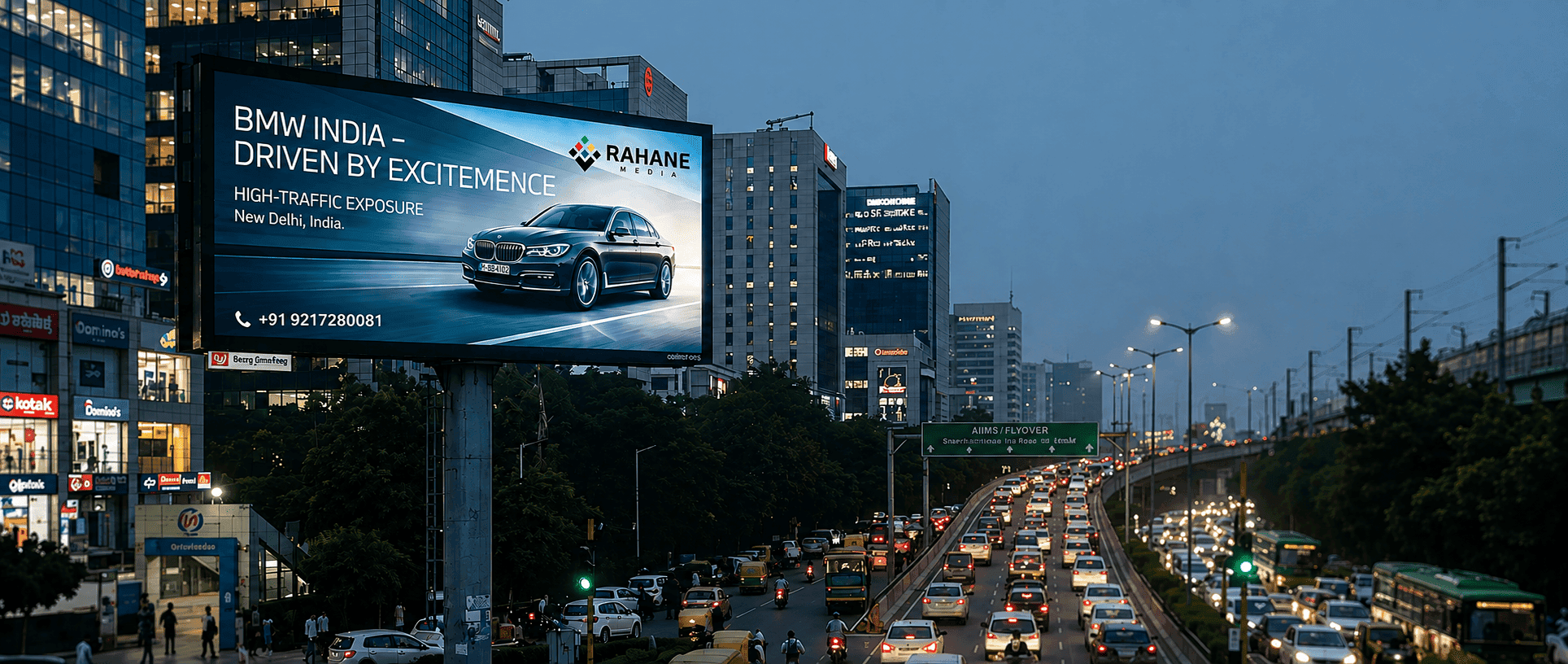
Hoarding Advertising That Puts Your Brand Where It’s Seen, Remembered, and Trusted
Your audience is already out on the streets every day — the question is, is your brand visible enough to stay in their mind? Discover how strategic hoarding advertising can turn everyday traffic into lasting brand recall and trust.
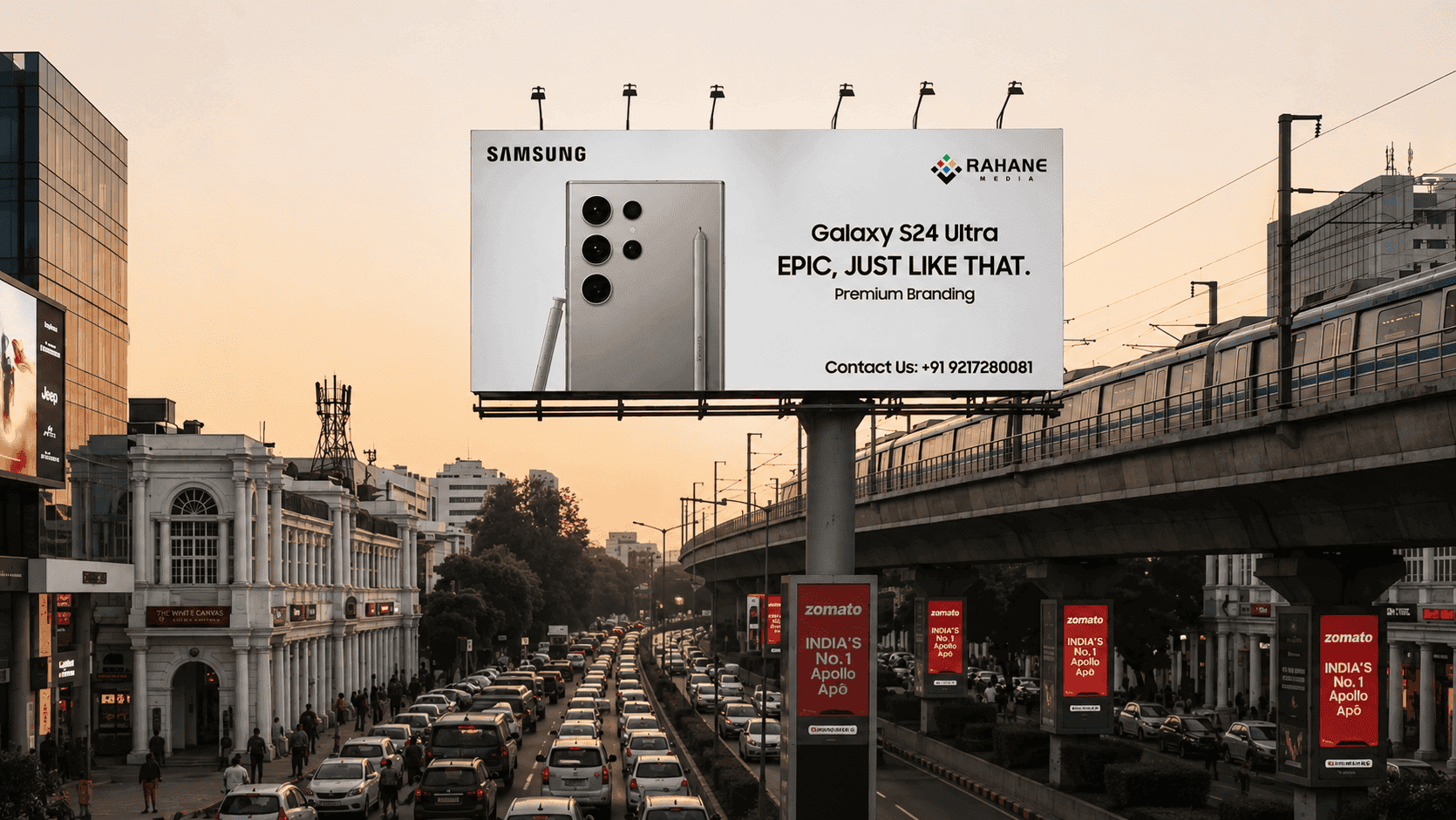
Billboard Advertising That Turns Visibility Into Real Brand Impact
Every day, thousands of potential customers pass through roads, highways, and city intersections — the question is, are they seeing your brand there? Explore how billboard advertising creates constant visibility that builds trust, recall, and long-term business presence.