Metro Advertising: Costs, Benefits & Best Performing Ad Formats
Here’s everything you need to know about how metro advertising works, what it costs, and why brands are investing heavily in it.
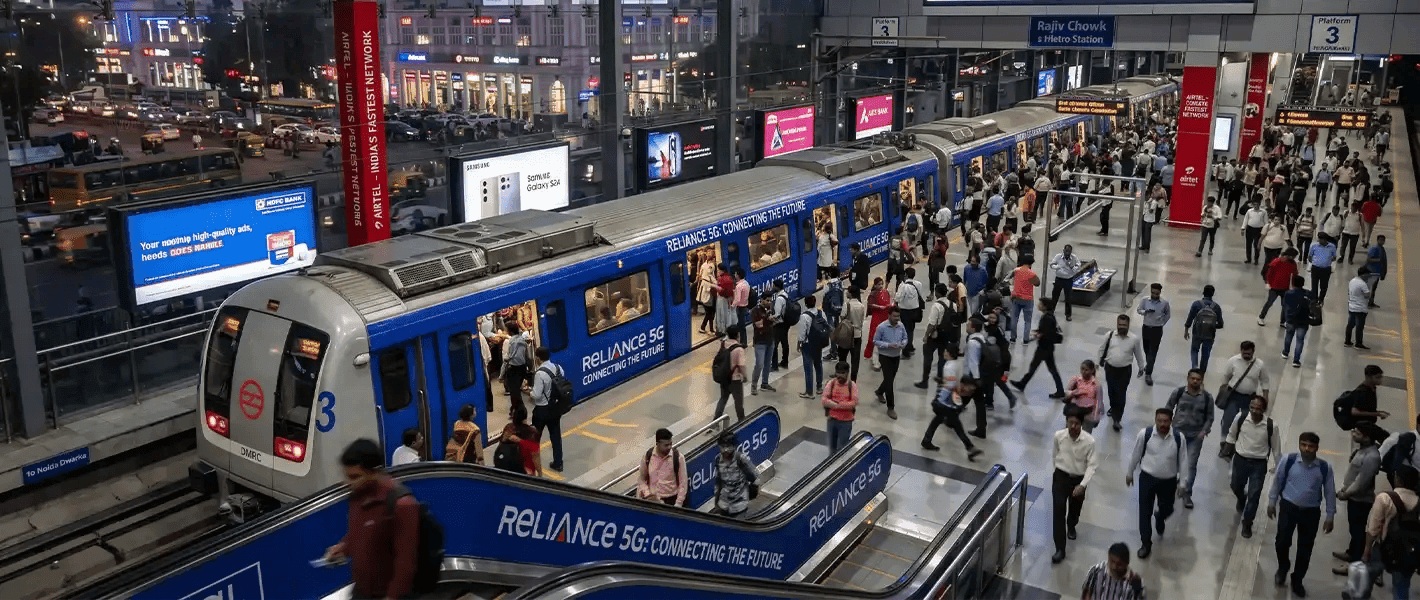
Cities move fast, but some brands still manage to stay visible everywhere. Metro advertising places your message directly into the daily routine of millions of commuters, creating repeated exposure that feels natural instead of forced. The result is visibility that doesn’t disappear after a few seconds — it stays with people long after the journey ends.
Every morning, millions of commuters stream through metro stations across Delhi, Mumbai, Bangalore, and beyond. They wait. They scroll. They look around. And in those quiet, captive moments — your brand has their full attention. Metro advertising has quietly become one of the most powerful tools in a modern marketer's toolkit. Unlike digital ads that get scrolled past in milliseconds, a well-placed metro station panel or train wrap commands attention for minutes at a time, repeated across dozens of journeys per month. In this guide, we break down everything you need to know about metro advertising in India — from formats and costs to campaign strategy and ROI — whether you're a brand manager, startup founder, or advertising agency. Metro advertising refers to any paid promotional activity placed within or around urban metro rail systems — including stations, platforms, trains, corridors, entry gates, and digital screens. Also called subway advertising, metro rail advertising, or transit advertising, it targets the daily commuter audience in high-density urban markets. In India, metro networks now span over 900+ km across 20+ cities, carrying an estimated 10–12 million passengers daily. That scale makes metro advertising one of the highest-reach OOH (Out-of-Home) formats available today. Static backlit panels, flex boards, and vinyl displays placed at entry/exit points, corridors, and concourses. High dwell time makes these ideal for brand storytelling. The entire exterior or interior of a metro train is covered with brand messaging. Extremely high visibility — the train itself becomes a moving billboard across the entire route. Column wraps, floor graphics, platform screen door branding, and ceiling hangers. Passengers on the platform have 2–5 minutes of idle time — prime attention window. LED and LCD screens placed at high-footfall areas that display dynamic, time-targeted content. Increasingly programmable and data-driven. Eye-level displays near ticketing zones and entry gates — some of the most viewed real estate in any metro station. Panels, overhead displays, and seat-back cards inside train coaches. Passengers spend 20–45 minutes per journey — delivering extended brand exposure. Sequential displays along escalators and tunnels create a "gallery" effect, ideal for storytelling campaigns. Metro advertising delivers a unique combination of scale, precision, and depth that few other formats can match: Massive captive audience — Commuters cannot skip, scroll past, or mute your ad High frequency exposure — Daily commuters see the same ad 20–25 times per month Urban, affluent demographic — Metro users skew educated, employed, and digitally active Brand safety — Fully controlled, premium environments with zero ad fraud Multi-format flexibility — From static panels to full train wraps to interactive DOOH Complementary to digital campaigns — Reinforces online messaging in the physical world City-wide reach — A single metro campaign can cover an entire metro city's key corridors Studies from global transit authorities consistently show metro advertising recall rates of 70–80%, significantly higher than online display (typically under 20%). Costs vary significantly by city, format, placement, and duration. Below is an approximate indicative guide: Key cost factors: Station footfall tier (A/B/C classification) Number of stations/units booked Duration of campaign Exclusivity requirements Production and installation costs (typically charged separately) The trend in India is firmly toward digital metro advertising, with DMRC, Namma Metro, and Hyderabad Metro all actively expanding their DOOH screen networks. Smart brands are running hybrid campaigns — static for baseline awareness, digital for tactical activations. Brand awareness, product launch, footfall drive, or app downloads? Your goal determines format and placement choices. Map your audience's likely commute routes. A fintech brand targeting IT professionals, for example, should prioritize stations near tech corridors (Whitefield in Bengaluru, Cyber City in Delhi/NCR). Work with a metro advertising agency to shortlist station tiers and formats that match your budget and reach goals. Metro ads are viewed from distances of 2–10 metres, often in motion. Creative must be bold, minimal, and readable in under 3 seconds. Avoid clutter. Finalize the media plan, get approvals from the metro authority, and produce materials to exact specification. Allow 7–14 days for production and installation. Track brand recall, footfall impact (if applicable), and cross-reference with digital campaign performance during the same period. Evaluate what worked — station, format, creative — and refine for the next cycle. 1. Programmatic DOOH: Real-time bidding for digital metro screens is arriving in India, allowing brands to activate ads based on time of day, weather, or even live events. 2. Interactive & Touchscreen Installations: Select stations in Delhi and Mumbai are piloting interactive kiosks where commuters can engage directly with brand content. 3. Augmented Reality (AR) Experiences: Global metros have begun deploying AR-enabled platforms; Indian metros are expected to follow as infrastructure matures. 4. Data-Driven Audience Targeting: Integration of anonymised commuter flow data with DOOH screens will allow brands to buy "audience" rather than just "location." 5. Sustainability-Led Formats: Solar-powered panels, recycled vinyl, and eco-friendly installation methods are becoming procurement criteria for large brands. 6. Integration with Mobile: Bluetooth beacon technology and QR-to-mobile journeys are bridging the gap between metro OOH and digital retargeting. Metro advertising in India is no longer just a supplementary channel — for urban-focused brands, it has become a cornerstone of the marketing mix. With daily ridership climbing, DOOH infrastructure expanding rapidly, and commuter demographics increasingly affluent and tech-savvy, the ROI of metro advertising has never been stronger. Whether you're launching a new product, building brand salience in a new city, or reinforcing a digital campaign with physical presence, metro advertising offers unmatched reach, frequency, and quality of attention.What is Metro Advertising?
Types of Metro Advertising
1. Station Panel Advertising
2. Train Wrap / Full Train Branding
3. Platform Branding
4. Digital Metro Advertising (DOOH Screens)
5. Concourse & Fare Gate Branding
6. In-Train Advertising
7. Metro Tunnel / Escalator Branding
Benefits of Metro Advertising
Metro Advertising Costs in India
Note: These are indicative ranges. Final pricing depends on station tier (interchange vs standard), exact placement, volume of units, and negotiated contracts. Always request a formal proposal from a licensed metro advertising agency.Digital vs Traditional Metro Advertising
How to Run a Successful Metro Advertising Campaign
Step 1: Define Your Objective
Step 2: Identify Your Target Commuter Profile
Step 3: Select Formats and Stations
Step 4: Design for the Environment
Step 5: Book and Produce
Step 6: Launch and Monitor
Step 7: Optimize and Renew
Challenges & Solutions
Future Trends in Metro Advertising
Metro vs Mall vs Billboard Advertising — Comparison
Conclusion
Questions Brands Commonly Ask
Quick answers about billboard advertising, media locations, and campaign planning.
What is the minimum budget to start a metro advertising campaign in India?
A static panel campaign at a single station can begin from ₹40,000–₹80,000 for a 4-week period, depending on the city. A meaningful multi-station campaign typically starts at ₹3–5 lakh.
How effective is metro advertising compared to digital ads?
Metro advertising offers significantly higher unaided recall (70–80%) vs digital display (~18–20%), and reaches audiences in a distraction-free environment. For brand building, it's highly complementary to digital spending.
Can small and mid-size businesses advertise in the metro?
Yes. While train wraps require larger budgets, platform panels and corridor displays are accessible for SMBs, especially in Tier-2 metro cities like Lucknow, Kochi, or Nagpur.
Ready to Launch Your
Campaign?
Partner with Rahane Media and take your brand visibility to the next level with outdoor advertising.
Related Blogs
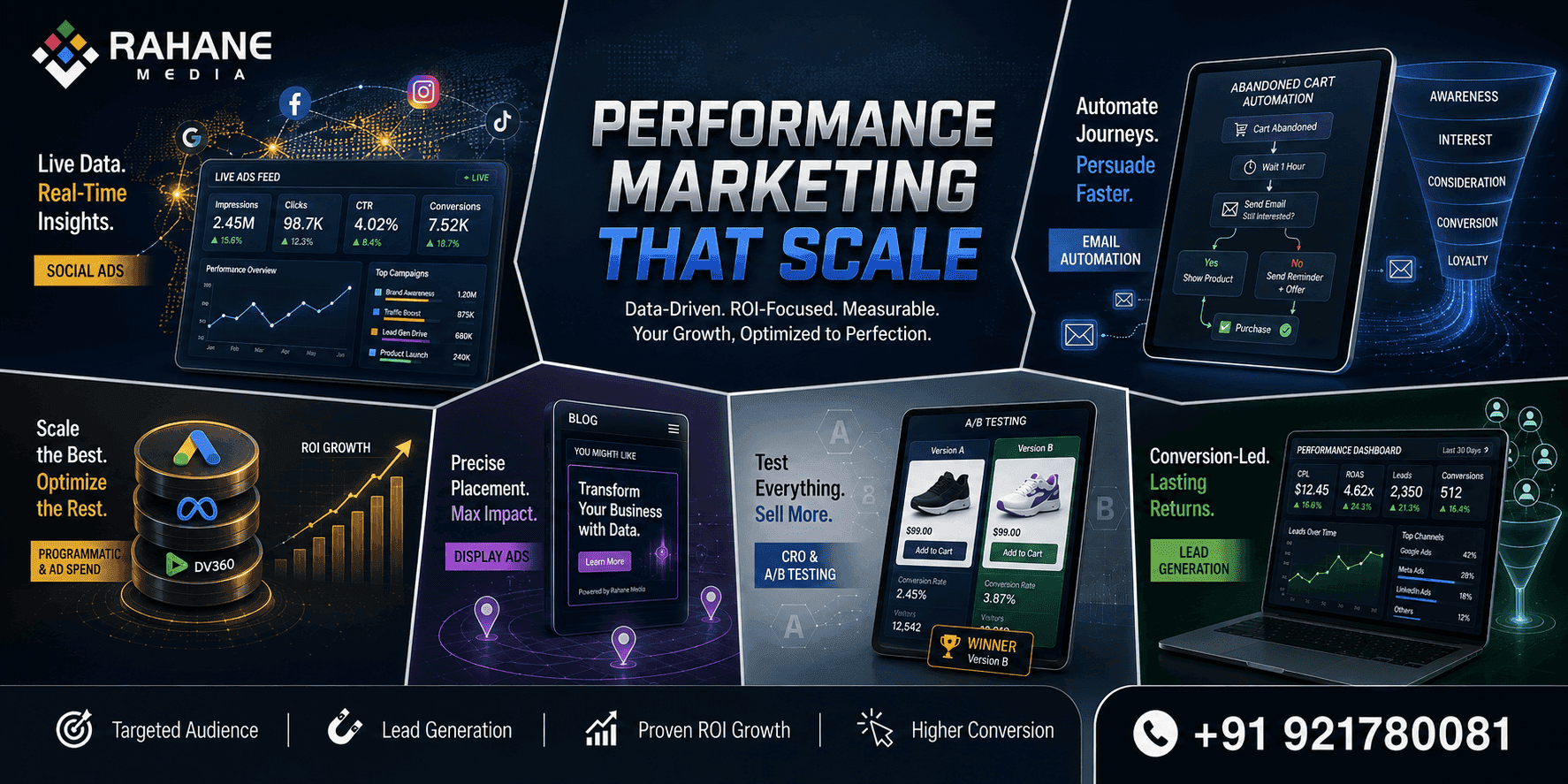
Top 5 Performance Marketing Agencies in India to Consider for Better ROI and Scalable Growth
Performance marketing focuses on measurable business outcomes rather than impressions and reach alone. Leads, purchases, customer acquisition cost (CAC), conversion rate and return on ad spend (ROAS) give businesses a clearer picture of what their advertising budget is actually delivering.

Print Media Advertising: How Smart Brands Are Using Tangible Marketing to Build Trust and Recall
A newspaper, magazine, brochure, poster, or professionally printed brand asset is physical. You can hold it, read it, keep it, and share it. That physical experience can make a message feel more credible and easier to remember.
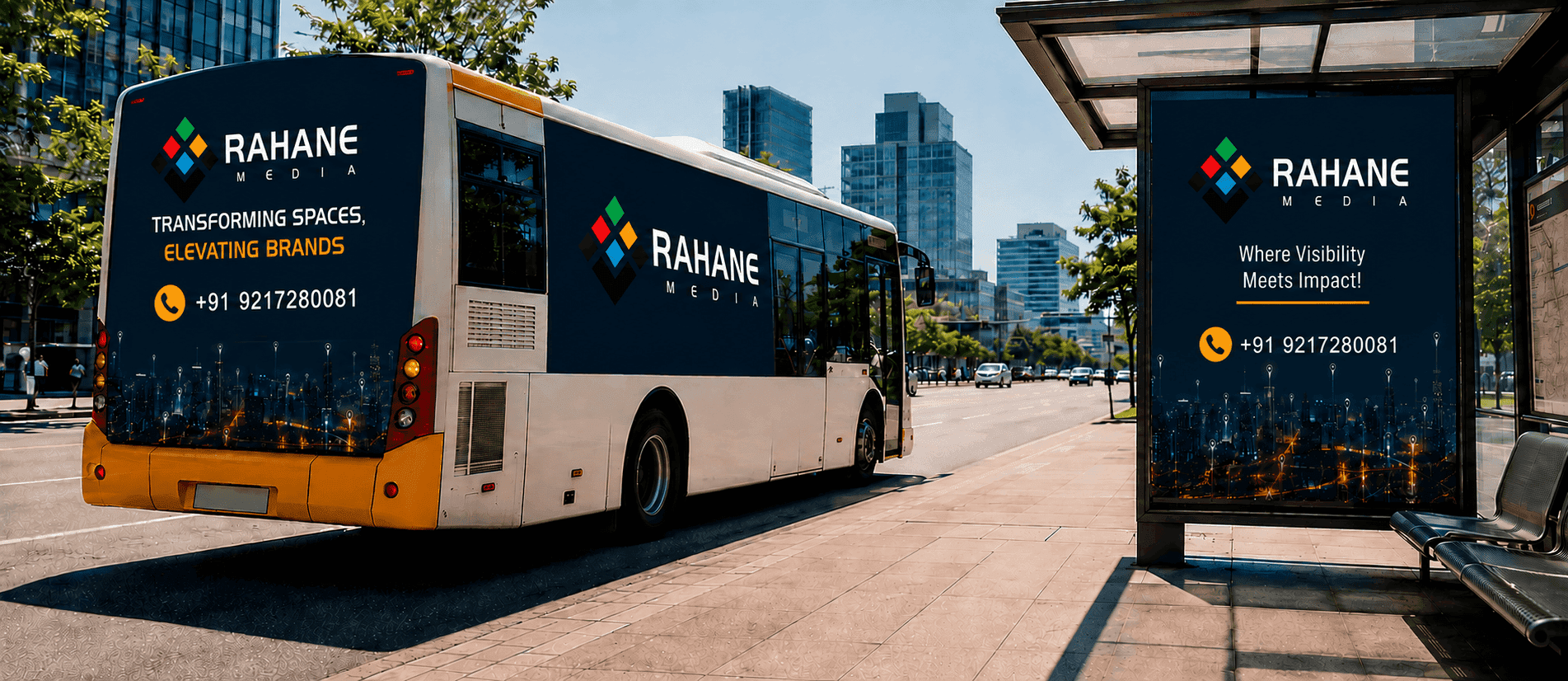
Bus Branding: How to Turn City Streets Into Your Biggest Marketing Opportunity
Instead of placing your brand on another screen, bus branding takes your message onto the streets where your customers already live, work, shop and commute. A branded bus can travel through residential neighbourhoods, commercial areas, business districts, markets and major traffic corridors throughout the day.