Mall Media Advertising Explained: Formats, Best Practices, and Results in 2026
Mall media advertising helps brands reach shoppers when they are most likely to make purchasing decisions. Explore advertising formats, costs, ROI opportunities, and how Rahane Media delivers campaigns that drive measurable results.
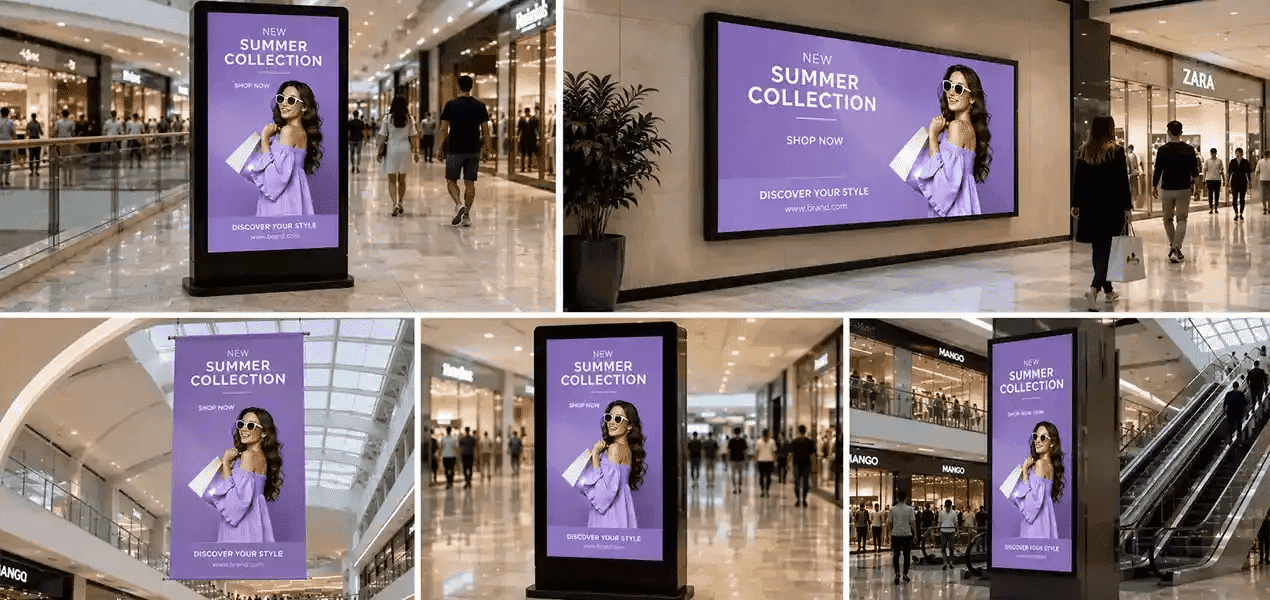
Walk into any major mall on a weekend afternoon and look around. Every single person there made an active choice to show up. They left the house, found parking, walked through those doors — and they came ready to spend.
That's not an audience you stumble upon. That's a marketing opportunity most brands are still underusing.
Mall media advertising puts your brand in front of people who are already in purchase mode. Not scrolling mindlessly. Not skipping your ad. Actually present, alert, and open to discovering something new.
And yet, a surprising number of brands still treat mall advertising as an afterthought — something to bolt on after digital budgets are spent.
In this guide, you'll get the full picture: what mall advertising actually includes, which formats work for which objectives, what it costs, how to measure whether it's working, and the mistakes that quietly kill campaigns — so you can make a smarter call on when and how to invest.
What Is Mall Media Advertising?
Mall media advertising is the use of paid promotional formats placed inside shopping mall premises to reach consumers while they're actively visiting. It includes digital screens, LED video walls, lift branding, escalator panels, atrium activations, brand kiosks, standees, food court branding, sampling counters, and interactive installations.
What separates mall advertising from roadside billboards or transit ads isn't just geography — it's context.
When someone is inside a mall, they're already in commercial mode. They're comparing options, checking prices, walking toward purchases. Mall advertising doesn't interrupt that process — it enters it.
In India, the mall landscape has grown well beyond the metros. Delhi NCR, Mumbai, Bengaluru, Hyderabad, and Pune obviously — but also Lucknow, Indore, Jaipur, Coimbatore, and dozens of other cities now have premium malls drawing consistent, quality footfall. The audience across all of them is broadly similar: urban, aspirational, 18–45, brand-aware, with real spending power.
For brands targeting that demographic in a single-environment placement, it's difficult to find a better channel.
Why Does Mall Advertising Work?
Mall advertising works because it reaches a purchase-intent audience in a high-dwell-time environment with contextual relevance — three conditions that rarely exist simultaneously in any other media channel.
Here's the breakdown:
High dwell time, real attention
The average mall visitor spends 90 minutes to 3 hours per visit. A highway billboard gets roughly two seconds from a vehicle passing at 60 kmph. In a mall, your advertising has the time and context to actually register — and be seen again.
Purchase-mode audience
Mall visitors made a deliberate choice to be there. They're comparing, evaluating, deciding. That active commercial mindset makes them far more receptive to brand messaging than someone watching TV or scrolling a feed.
Demographic precision
Premium malls attract a concentrated profile — urban, middle-to-upper income, 18–45, brand-conscious. For brands targeting this group, no other OOH format delivers this kind of demographic concentration.
Contextual placement
A fashion brand near the clothing floor, a food brand near the food court, a car brand in the atrium — when your placement is physically close to where buying decisions happen, the relevance multiplies impact.
Repeat exposure within a single visit
A shopper might pass your digital screen at the entrance, see your escalator branding on Level 2, notice your food court panel during lunch, and scan your QR code on the way out. Four touchpoints. One visit. No extra media spend.
Types of Mall Advertising Formats
Digital Screens and DOOH Displays
Digital out-of-home screens inside malls run dynamic, high-resolution content — video, animation, rotating creatives — and can be updated remotely. They support time-of-day scheduling, so you can run different messaging during morning footfall versus weekend peak hours.
Entry areas, atrium-facing positions, and screens near anchor stores get the most eyeballs. Screens near escalator landings and lift lobbies benefit from slow-moving, high-frequency audiences — exactly what you want for message retention.
LED Video Walls
Large-format LED video walls — typically in the main atrium or central junction of a premium mall — offer visual scale that makes people stop. Not because they have to. Because the content commands it.
For product launches, brand campaigns, and premium positioning, an LED video wall creates what marketers call a "brand moment." The impression is significantly stronger than any standard format. For new brands establishing credibility quickly, that scale of presence sends a signal on its own.
Lift Branding
Lifts are the most underestimated placement in mall advertising.
The audience is enclosed with nowhere else to look for 20–40 seconds per journey. Most mall visitors use the lift two to four times per visit. The interior — walls, ceiling panels, floor graphics, cabin screens — can be fully branded.
For QR code campaigns, product detail communication, and new brand introductions, lift branding consistently delivers recall rates that far larger formats don't. The intimacy of the space is the feature, not the limitation.
Escalator Branding
Step risers, side panels, and handrail branding catch shoppers in transition — moving between floors, unhurried, with relatively free attention. It's a moment where most people have nothing specific to look at, so a well-placed creative naturally fills that space.
Repetition is the real value. The same shopper might use the escalator four or five times in one visit. By the third exposure, the brand has registered.
Atrium Activations
The atrium is the most visible, highest-traffic zone in any mall. Brands that activate here — with product displays, demo stations, immersive experiences, contests, interactive games, photo moments — are essentially the centrepiece of the mall for the duration of their campaign.
Atrium activations are the only mall format that creates genuine two-way interaction. A consumer doesn't just see the brand — they engage with it, touch the product, speak to someone, take a photo. That kind of direct engagement builds brand connection in a way passive exposure simply cannot. It also generates organic social content, quietly extending campaign reach beyond the mall itself.
For product launches especially, a well-executed atrium activation is hard to beat on ROI.
Kiosk Advertising and Brand Kiosks
A kiosk is simultaneously an advertising format and a direct conversion point. Done well, it's one of the most efficient formats in the mall advertising toolkit — because it turns passive awareness into an immediate action.
Banks and fintech apps use kiosks to open accounts and collect qualified leads. Beauty brands use them for demos and sampling. Consumer electronics brands let shoppers try before they buy. Real estate developers capture serious enquiries face-to-face. The common thread: the kiosk puts brand and consumer in direct contact at exactly the right moment.
Sampling Campaigns
Handing someone a product inside a mall is one of the highest-quality brand interactions available in marketing. The person is there, they have time, and they come ready to buy. A physical experience of the product — tasting it, smelling it, feeling it — does something no ad creative can replicate.
Mall sampling works best for food and beverage brands, personal care products, and anything where the product experience is the strongest selling argument. Conversion rates from well-run in-mall sampling campaigns consistently outperform most other formats — digital or physical.
Interactive Installations
AR try-ons, touchscreen brand games, immersive brand worlds, shareable selfie setups — these are experiences, not ads. They work because they flip the engagement dynamic: instead of pushing a message at someone, you create something they choose to engage with.
The downstream benefit is organic social amplification. A striking interactive installation at a premium mall will generate user-created content from visitors without any paid media behind it. For brands with younger target audiences, that amplification is often worth as much as the in-mall reach itself.
Standee Advertising
Standees are the workhorse of mall advertising. Not the flashiest format, but consistently reliable for directional messaging, promotional communication, and supplementary brand presence in high-traffic corridors.
Cost is among the most accessible in the entire mall mix, making standees a sensible entry point for brands testing the medium — and a useful supplementary layer for larger campaigns filling every touchpoint.
Placement is everything. A well-placed standee at a corridor junction or outside a target store performs well. One tucked in a low-traffic corner doesn't.
Food Court Branding
People sit in mall food courts for twenty to forty minutes at a stretch. They're relaxed, with family or friends, looking around with nothing specific demanding their attention.
That makes the food court one of the highest-quality attention environments in the entire mall. Tray liners, table branding, pillar wraps, digital menu board slots, overhead banners — all of it reaches a seated, unhurried audience. For mass-market brands and consumer packaged goods, food court branding delivers reach and dwell time in a combination that's genuinely rare.
Benefits of Mall Media Advertising
Direct proximity to the purchase decision — often within the same building as a store or service point
A high-quality, demographically concentrated audience rather than broad, untargeted reach
Extended dwell time that supports complex messaging, product details, and QR code interactions
Multi-format flexibility to build frequency across a single consumer visit
Genuine two-way engagement through activations and kiosks
Peak amplification during Diwali, New Year, and major sale seasons when footfall and buying intent peak simultaneously
Organic social reach from experiential activations
Measurable outcomes through footfall data, QR tracking, kiosk leads, and conversion metrics
Who Should Invest in Mall Advertising?
Mall media advertising works best for brands targeting urban, 18–45-year-old consumers with moderate to high purchasing power, especially when the campaign objective involves product trial, brand consideration, or conversion-stage engagement.
Brands that consistently get strong results from mall advertising:
Consumer products that benefit from direct trial or demonstration
Brands entering a new city needing to build local recognition fast
D2C brands building offline brand presence without committing to full retail
Seasonal campaigns timed around festivals or sale events
Service brands — banks, fintech, insurance, telecom — benefiting from face-to-face lead capture
Premium or aspirational brands whose target demographic concentrates in premium malls
Industries That Get the Strongest Returns
How Mall Advertising Moves People Toward Purchase
Mall advertising compresses the purchase funnel by creating multiple brand touchpoints within a single consumer visit — moving someone from unaided awareness to active consideration in under two hours.
Here's how it works in practice:
A shopper enters the mall and sees your brand on the digital screen at the entrance. They weren't thinking about your category today. The visual registers anyway.
They walk past your atrium activation. Someone's demonstrating the product. They slow down for a moment, then keep walking — but now the brand is in their active awareness.
On the escalator to Level 2, your step riser branding reinforces the name and tagline. Third exposure in twenty minutes.
At the food court, your tray liner is directly in front of them while they eat. They read the copy. They notice the QR code for a discount. They scan it.
They're now in your funnel.
That journey — five touchpoints, one mall visit, one consumer — only happens in a mall environment. It's why brands using multiple formats within the same mall consistently outperform single-format campaigns on both recall and conversion.
Thinking About Mall Advertising for Your Brand?
Rahane Media plans and executes mall media campaigns across India — from single-mall product launches to multi-city brand campaigns. If you want to understand what's possible within your budget, we're happy to have that conversation first.
Mall Advertising vs Traditional Outdoor Advertising
Mall media advertising and traditional OOH serve different roles in the media mix — mall advertising wins on audience quality and conversion proximity, while billboard and hoarding advertising wins on geographic reach and mass awareness. Most effective campaigns use both.
Traditional outdoor advertising is not a competitor to mall advertising — it's a complement. Outdoor builds broad awareness at scale. Mall advertising converts that awareness into action at the right moment.
If you're evaluating OOH advertising options more broadly before deciding where to allocate budget, understanding the full channel landscape first will lead to significantly better decisions.
Mall Advertising Cost in India: What Actually Drives Pricing
The cost of mall advertising in India depends on five main factors: mall tier and footfall, format and placement, campaign duration, number of locations, and seasonality. There is no single rate card — anyone quoting a flat price without understanding your brief is guessing.
Mall tier and daily footfall
A flagship mall in South Delhi or Bandra with 50,000+ daily visitors is priced very differently from a mall in a tier-2 city with 8,000 daily visitors. Both have value. Not at the same rate.
Format and placement within the mall
An LED video wall in the main atrium is the premium end. A corridor standee is the accessible end. Everything between varies by visibility, footfall concentration, and dwell time at that specific location.
Campaign duration
A two-week product launch campaign is priced differently from a three-month sustained presence. Longer commitments typically attract better per-day rates.
Number of locations
Multi-mall, multi-city campaigns are usually negotiated as packages with better per-location economics than single-mall bookings.
Seasonality
Diwali, New Year, end-of-season sale periods — demand for inventory spikes and rates reflect it. Planning around peak seasons improves cost efficiency significantly.
Indicative Cost Ranges (INR)
These are indicative ranges. Actual pricing depends on mall, city, placement, duration, and availability. Contact Rahane Media with your brief for an accurate campaign estimate. Mall advertising ROI can be measured through footfall analytics, QR code tracking, promo code redemptions, kiosk lead data, brand lift studies, and in-mall sales correlation — all of which provide direct, attributable campaign signals. Footfall and dwell time data: Smart mall systems in most premium properties now provide anonymised footfall data using WiFi and Bluetooth sensing. This gives a reasonable estimate of actual exposure volume. QR code tracking: Campaign-specific QR codes in your creatives create a direct, attributable tracking link. Scan volume, conversion path, app downloads, and purchases are all measurable downstream. Promo codes: Unique discount codes from sampling counters or kiosks tie directly to purchase tracking — online or in-store. Kiosk lead capture: Every name, number, and interest signal captured at a kiosk is directly attributable to the mall campaign. Lead quality from in-mall kiosks typically outperforms most digital lead-gen channels for service brands. Brand lift studies: Pre- and post-campaign surveys within the mall catchment area measure shifts in unaided awareness and category consideration. Reliable for larger campaigns where awareness shift is the primary objective. Sales correlation: For brands with stores in the same mall, overlaying campaign periods against sales data gives a clean proxy for incremental impact. The growth of DOOH advertising inside malls has made digital screen measurement particularly robust — play-count reports, impression estimates, and audience demographic data from integrated sensors are now standard deliverables. The most common mistake is running a single-format campaign and expecting multi-touchpoint results. Mall advertising's strength is frequency across a single visit — one format removes that advantage. Here are the other mistakes that come up repeatedly: A hoarding creative doesn't work on a digital screen. A TV commercial doesn't translate to an atrium activation. Each format has its own attention window, viewing distance, and action logic. Brief creatives to the format, not the other way around. Prime inventory during Diwali or festive windows fills months in advance. Arriving six weeks before Diwali looking for an atrium slot typically means paying a premium for what's left — or going without. Brand awareness campaigns need 4–6 weeks minimum to show measurable recall shifts. Stopping after two weeks and calling the campaign ineffective is like cancelling a medicine course halfway through. A mall in South Delhi and a mall in a tier-3 city serve different audiences and produce different results. The right mall depends on your target consumer and geographic priority — not the lowest available rate. Many brands take a passive approach — screens and standees only — when the real ROI potential in malls often sits in direct engagement formats. If your product benefits from any kind of interaction, the atrium is worth exploring seriously. The future of mall media advertising is converging around programmatic DOOH, phygital integration, AR experiences, and hyperlocal audience targeting — all of which increase both the precision and the measurability of in-mall campaigns. Mall digital screens are increasingly connected to programmatic buying platforms. Brands can now purchase impressions based on real-time audience data — time of day, footfall levels, demographic profiling from anonymised sensor data. This brings the targeting precision of digital advertising into a physical environment. NFC tags, QR codes, social media challenges, app integrations — campaigns now move fluidly between the physical mall and the consumer's digital life. Brands designing for this crossover consistently get more mileage from the same spend. AR try-ons, product configurators, gamified brand experiences — these are becoming viable for mid-size brands, not just the largest advertisers. Urban mall audiences, especially under 35, expect and respond to immersive experiences. As mall management companies develop better anonymised visitor data, reaching specific audience segments within a mall — by age band, spending category, or visit frequency — will become a standard planning tool rather than an advanced option. Understanding how OOH and DOOH advertising compare at a channel level is useful context before mapping how these trends affect your media strategy specifically. Before you finalise formats, locations, or budgets — speak with a specialist. Rahane Media offers focused, no-obligation media planning conversations to help you understand what's realistic within your budget and how to structure a campaign for your specific objective. Choosing the right media partner matters as much as choosing the right format. Here's what consistently brings brands to Rahane Media — and keeps them coming back. A lot of media companies will sell you whatever slots are available. We work differently. Every brief we receive starts with the business objective, target audience, and campaign timeline — before a single format is recommended. We draw on experience across retail, automotive, FMCG, fintech, real estate, and entertainment to recommend what actually makes sense for your category and goal. Our relationships with mall management companies and media owners across India — metros and growing tier-2 cities alike — give us access to inventory that isn't always visible on standard booking channels. For high-demand placements in peak periods, that network matters. We treat campaign planning as a genuine strategy exercise. Which malls reach your consumer? Which formats serve your objective at this stage of the funnel? How should the campaign phase across weeks? What creatives work in which placements? These questions get answered before anything is booked. From planning and booking through creative coordination, production supervision, installation, and live campaign monitoring — Rahane Media manages the full process. You brief us once. We handle the rest. Every campaign includes structured reporting — impression data, footfall analytics, QR code performance, activation engagement, lead capture volumes. Whatever the relevant metrics are for your campaign type, you'll see them clearly, not buried somewhere you'll never look. We don't have a standard mall package. Every brief gets a response built for that brand, that objective, that budget, and those locations. A campaign built around your specific needs will always outperform a package built around what's convenient for the media company. Read more about the strategic approach we bring to location-based outdoor advertising to understand how we think before we spend. Mall media advertising has a straightforward value proposition: it puts your brand in front of high-intent consumers, in a high-dwell-time environment, at a moment when they're actively open to what you're offering. That combination — intent, attention, and context — is genuinely rare in modern advertising. The formats are varied enough to suit different objectives and budgets. The measurement tools are good enough to track what's working. The audience quality justifies the investment for the right brands. What it requires is thoughtful planning. The right mall. The right format mix. The right creative approach. The right campaign timing. Get those elements right, and mall advertising consistently delivers. The difference between a campaign that delivers and one that doesn't often comes down to who's planning it with you. Key takeaways: Mall advertising reaches purchase-intent consumers in a high-quality, high-dwell-time environment Multiple format options serve different objectives — from broad awareness to direct conversion ROI is trackable through QR codes, lead capture, footfall data, and sales correlation Costs vary widely — get a brief-based estimate rather than working from generic rate cards Multi-format campaigns outperform single-format placements on recall and conversion The right media partner makes a material difference to campaign outcomes Your next customer is in a mall right now. They're walking through the atrium, riding the escalator, sitting at the food court with twenty minutes to spare. They're open, present, and ready to discover something new. The question is whether your brand is there to meet them. Our team will help you identify which malls reach your consumer, which formats serve your objective, and what campaign structure gives you the best return — without overcomplicating the process or pushing formats that aren't right for your brief. 📞 Call us to talk through your requirements📧 Send us a brief and we'll respond within 24 hours. No pressure. Just a straight conversation about what makes sense for your brand.How to Measure ROI from Mall Media Campaigns
Common Mistakes Brands Make with Mall Advertising
Using creatives built for other formats
Booking last-minute for peak periods
Pulling campaigns too early
Treating all malls the same
Ignoring activation potential
Future Trends in Mall Advertising
Programmatic DOOH
Phygital integration
Augmented reality activations
Hyperlocal audience targeting
📋 Planning a Mall Media Campaign? Let's Talk.
Why Brands Choose Rahane Media for Mall Media Advertising
We Start with Your Objective, Not Our Inventory
Access to Premium Mall Inventory Across India
Strategy Before Booking
End-to-End Execution
Reporting That's Actually Useful
Solutions Built Around Your Brief
Conclusion
Start Your Mall Media Campaign with Rahane Media
Questions Brands Commonly Ask
Quick answers about billboard advertising, media locations, and campaign planning.
What is mall media advertising?
Mall media advertising refers to advertising placed inside shopping malls through formats such as digital screens, kiosks, standees, activations, and branding displays. It helps brands reach shoppers while they are browsing and making purchase decisions within the mall environment.
How much does mall advertising cost in India?
Mall advertising costs in India typically range from ₹5,000 per month for a standee to ₹10,00,000+ per month for premium formats such as LED video walls and atrium activations. Pricing depends on the ad format, mall, city, placement, campaign duration, and seasonality.
Which industries benefit most from mall advertising?
Mall advertising is most effective for retail and fashion, food and beverage, consumer electronics, automotive, banking and fintech, real estate, beauty and personal care, healthcare, EdTech, and entertainment brands. It works particularly well for reaching urban consumers aged 18–45 and supporting product launches, seasonal promotions, and purchase-driven campaigns.
Ready to Launch Your
Campaign?
Partner with Rahane Media and take your brand visibility to the next level with outdoor advertising.
Related Blogs
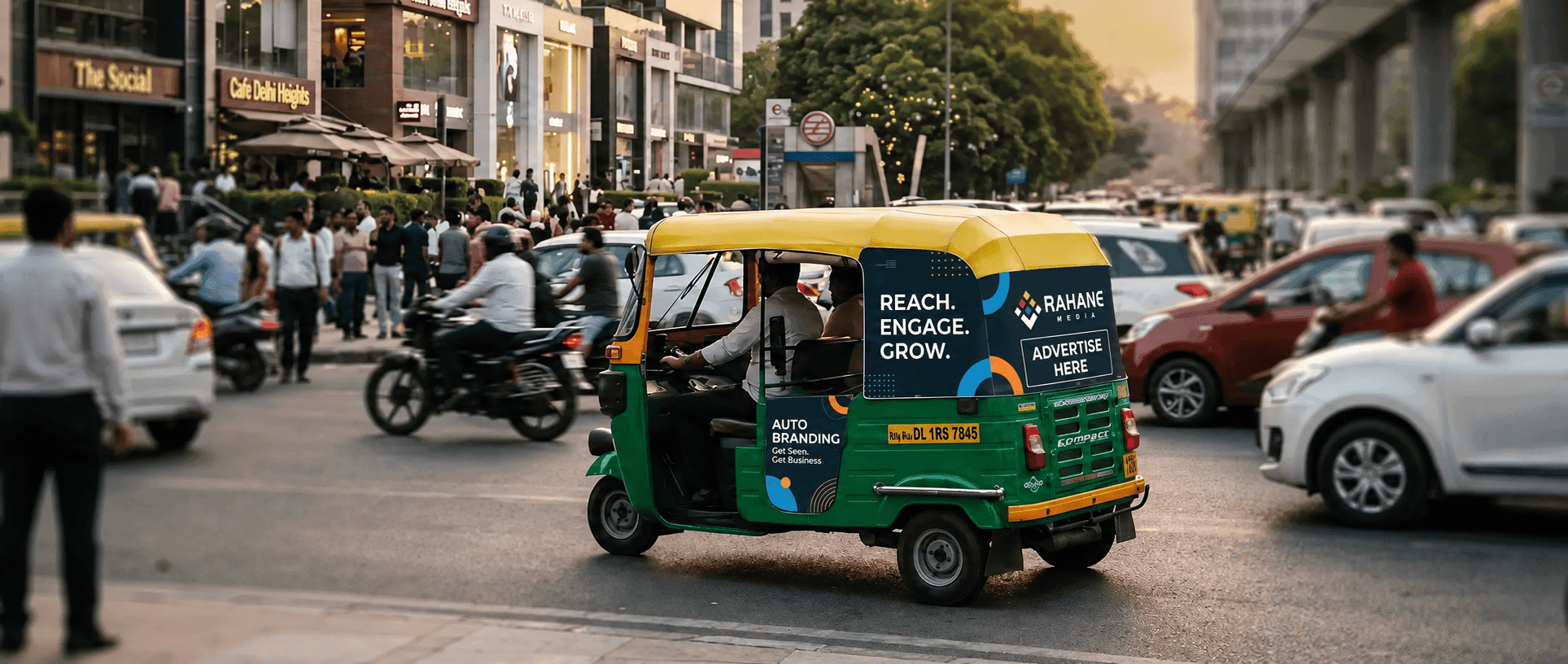
Auto Branding That Drives Real Visibility and Turns Traffic into Customers
Your audience doesn’t stay in one place—so why should your advertising? Learn how auto branding captures attention wherever the road takes it.
Hoarding Advertising That Puts Your Brand Where It’s Seen, Remembered, and Trusted
Your audience is already out on the streets every day — the question is, is your brand visible enough to stay in their mind? Discover how strategic hoarding advertising can turn everyday traffic into lasting brand recall and trust.
Billboard Advertising That Turns Visibility Into Real Brand Impact
Every day, thousands of potential customers pass through roads, highways, and city intersections — the question is, are they seeing your brand there? Explore how billboard advertising creates constant visibility that builds trust, recall, and long-term business presence.
Metro Advertising: Costs, Benefits & Best Performing Ad Formats
Here’s everything you need to know about how metro advertising works, what it costs, and why brands are investing heavily in it.
DOOH Advertising: What It Is, How It Works, and Why It Drives Real Results
Explore how DOOH advertising works, why it’s becoming a key part of modern marketing strategies, and how brands can use the right locations, formats, and creatives to drive stronger visibility and audience engagement.
OOH Ads Explained: What Outdoor Media Is, How It Works and What It Costs
You can block a digital ad. You can skip a YouTube video. But you can't ignore a billboard on your morning commute. That's the quiet power of OOH advertising — and this guide breaks down exactly how it works.
OOH vs DOOH: What Is the Difference and Which Should You Choose?
OOH and DOOH both put your brand in front of people on the move — but they work very differently. Here's a clear breakdown to help you pick the right format for your next outdoor campaign in India.
Hoarding vs Billboard: The Complete Guide for Indian Businesses (2026)
Planning an outdoor campaign in India? Before you book a single site, you need to know the difference between a hoarding and a billboard — it could save you lakhs in wasted ad spend.