OOH Ads Explained: What Outdoor Media Is, How It Works and What It Costs
You can block a digital ad. You can skip a YouTube video. But you can't ignore a billboard on your morning commute. That's the quiet power of OOH advertising — and this guide breaks down exactly how it works.
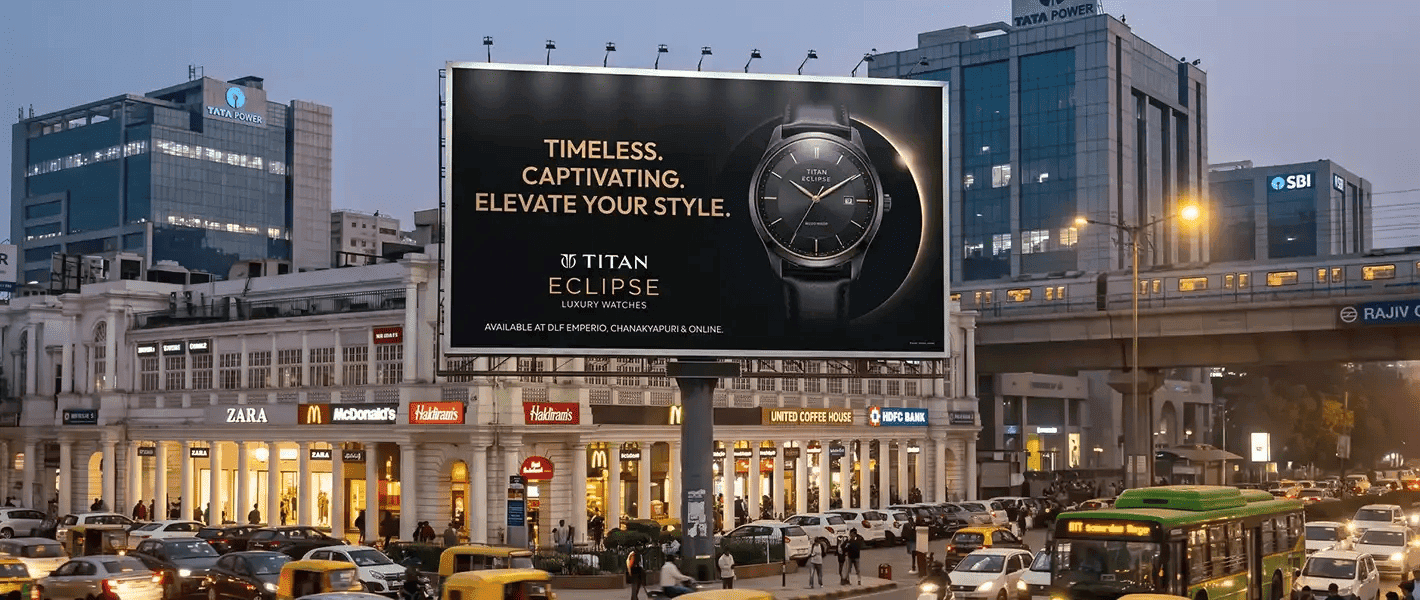
OOH ads — short for out of home ads — are one of the oldest and most effective forms of advertising in existence. From the billboard you pass on the highway every morning to the digital screen at your metro station, OOH advertising is the medium that reaches people in the real world, outside their homes and away from their screens.
This guide explains what OOH ads are, how out of home media works, what formats are available in India, what it costs, and why brands continue to invest in outdoor media even in a digital-first world.
What Does OOH Stand For?
OOH stands for Out of Home. The OOH full form — Out of Home — refers to any advertising that reaches consumers while they are outside their homes. This includes billboards, hoardings, transit ads, digital screens, metro station ads, airport branding, mall media, and more.
The term OOH advertising is used interchangeably with outdoor advertising and out of home media. DOOH (Digital Out of Home) is a subset of OOH that specifically covers digital screens and LED displays.
What is OOH Marketing?
OOH marketing is the strategic use of outdoor media placements to build brand awareness, drive recall, and influence consumer decisions in public spaces. Unlike digital marketing, which follows users online, OOH marketing places your brand in the physical environments where your audience already spends time — roads, transit routes, shopping areas, and public spaces.
OOH marketing is not just about putting up a billboard. It involves choosing the right format, the right location, the right message, and the right duration to maximise impact for a specific audience.
Types of OOH Ads: All Outdoor Media Formats Explained
OOH advertising covers a wide range of formats. Here is a breakdown of every major type of outdoor media available in India:
1. Billboards and Hoardings
The most recognised form of OOH ads. Large static or illuminated boards placed on highways, busy roads, flyovers, and commercial areas. Available in standard, jumbo, and gantry sizes.
Best for: brand awareness, product launches, city-wide campaigns
Typical size: 10 ft x 20 ft to 20 ft x 60 ft
Locations: highways, commercial corridors, flyovers
2. Transit Advertising
OOH ads placed on or inside public transport vehicles — buses, auto rickshaws, cabs, metro trains, and railways. Transit advertising is highly effective because it moves with the city, delivering repeated impressions across residential and commercial zones.
Best for: local brand visibility, D2C, food delivery, apps
Formats: bus panels, auto hood branding, cab wraps, metro train ads
Locations: entire city routes, residential areas, commercial zones
3. Metro Station Advertising
OOH ads placed inside and around metro stations — pillar branding, platform screens, entry gate panels, and digital displays. Metro advertising reaches a high-frequency captive audience during peak commute hours.
Best for: premium brand positioning, corporate audiences, mass awareness
Locations: Delhi Metro, Noida Metro, and other major metro networks
4. DOOH — Digital Out of Home
Digital OOH (DOOH) refers to outdoor advertising displayed on LED and LCD screens in public spaces. Unlike static hoardings, DOOH allows multiple brands to rotate on the same screen, dynamic creative changes, and real-time content updates.
Best for: product campaigns, event promotions, time-sensitive messaging
Locations: malls, airports, metro stations, highways, commercial areas
5. Airport Advertising
OOH ads inside and around airports — including departure lounges, baggage claim areas, entry corridors, and external hoardings. Airport advertising reaches a high-income, decision-making audience.
Best for: luxury brands, B2B, finance, real estate, hospitality
6. Mall Media
Advertising inside shopping malls through display panels, digital screens, kiosks, and branded zones. Mall media captures shoppers who are already in a buying mindset.
Best for: retail brands, FMCG, fashion, food and beverage
7. Cinema Advertising
Ads shown on-screen before films, or placed inside cinema lobbies. Cinema advertising delivers a highly engaged, undivided-attention audience.
Best for: entertainment, lifestyle, brand storytelling
8. Lift and Residential Media
OOH ads placed inside residential lift cabins, apartment notice boards, and society gates. This format reaches a hyper-local audience at close range and high frequency.
Best for: hyperlocal businesses, services, education, food delivery
How OOH Advertising Works
OOH advertising works through repeated exposure in high-traffic environments. The core principle is simple: the more often your target audience sees your brand in their daily environment, the more familiar it becomes — and familiarity builds trust and preference over time.
A well-planned OOH campaign involves four key decisions:
Format selection: Choose the right type of outdoor media based on your campaign goal — billboards for awareness, transit ads for local reach, airport ads for premium positioning.
Location planning: Identify where your target audience spends time. A food brand should prioritise residential and market corridors; a B2B brand should focus on corporate zones and airports.
Creative design: OOH ads have 2–3 seconds to make an impression. Effective outdoor media creative uses large visuals, minimal text (7 words or fewer), and one clear message.
Duration: Most OOH campaigns run for 2–4 weeks at minimum. Longer campaigns (2–3 months) significantly improve brand recall through repetition.
OOH Advertising Cost in India
OOH advertising costs in India vary widely based on the city, location, format, and duration. Here are indicative price ranges for the most common outdoor media formats:
Note: These are indicative ranges. Actual costs depend on exact location, availability, campaign duration, and vendor. Contact Rahane Media for a customised quote.
OOH Advertising in India: Market Overview
India is one of the fastest-growing OOH advertising markets in Asia. The Indian OOH industry is estimated to be worth over ₹3,500 crore and continues to grow at approximately 10–12% annually, driven by rapid urbanisation, infrastructure growth, and the expansion of metro rail networks.
Key trends shaping OOH advertising in India today:
DOOH expansion: Digital screens are replacing static hoardings across malls, metros, airports, and highways.
Programmatic OOH: Data-driven ad buying is entering the outdoor media space, allowing more targeted placements.
Transit media growth: Cab , bus, and auto rickshaw advertising is growing rapidly in Tier 1 and Tier 2 cities.
Regional market growth: OOH advertising is expanding beyond Delhi, Mumbai, and Bangalore into cities like Pune, Hyderabad, Lucknow, and Jaipur.
OOH Ads vs Digital Advertising: How They Work Together
A common question is whether OOH marketing replaces or competes with digital advertising. The answer is neither — they complement each other.
Brands that combine OOH advertising with digital campaigns consistently see better results than those using either channel alone. Outdoor media builds the awareness and trust that makes digital ads more effective.
Outdoor Advertising Examples in India
Here are real-world examples of how brands use OOH ads effectively in India:
Swiggy and Zomato: Both brands use high-frequency transit advertising — auto rickshaw branding and bus panels — in residential and market zones to stay top-of-mind for food delivery decisions.
Real estate developers: Highway billboards near upcoming projects are a standard tool for real estate brands to capture the attention of commuters in relevant corridors.
Ed-tech brands (BYJU’S, Unacademy): Heavy metro station advertising in Delhi and Bangalore targets student and parent commuters during peak hours.
FMCG brands: Mall media and lift branding in residential societies are widely used by FMCG brands to drive last-mile recall before a purchase decision.
IPL and entertainment: Large-format hoardings and DOOH screens are used for event-based campaigns requiring maximum visibility in a short window.
Why OOH Advertising Works: Key Advantages
Cannot be skipped or blocked — unlike digital ads, outdoor media cannot be muted, skipped, or blocked
24/7 visibility — a hoarding or transit ad works continuously without additional spend
High reach at low cost per impression — OOH ads reach thousands of people daily for a fixed monthly cost
Builds brand trust — physical presence in the real world signals credibility
Complements digital campaigns — reinforces messaging across touchpoints
Effective for local and national campaigns — scalable from a single neighbourhood to pan-India
How Rahane Media Plans OOH Campaigns
Rahane Media is an outdoor advertising agency covering Delhi NCR and key Indian markets. The approach is rooted in three principles:
Location intelligence: Every OOH placement is selected based on traffic data, audience demographics, and proximity to the client’s target zones — not just availability.
Format matching: The right outdoor media format is chosen based on campaign goals. Brand awareness campaigns use large-format hoardings; local reach campaigns use transit media; premium positioning uses metro or airport advertising.
Transparent execution: Clients receive proof of installation, clear timelines, and full visibility into site selection and costs before committing to a campaign.
If you are planning an OOH campaign in Delhi, Gurgaon, Noida, or anywhere in NCR, contact Rahane Media for a free consultation and quote. Call or WhatsApp: +91 9718718200 | Email: info@rahanemedia.com
Questions Brands Commonly Ask
Quick answers about billboard advertising, media locations, and campaign planning.
What does OOH stand for?
OOH stands for Out of Home. The OOH full form — Out of Home — refers to any advertising that reaches people outside their homes, including billboards, transit ads, metro station ads, digital screens, mall media, and airport advertising.
What are OOH ads?
OOH ads are advertisements placed in public spaces that consumers encounter while outside their homes. Common examples include highway billboards, auto rickshaw branding, metro station panels, mall screens, and digital hoardings. In India, the OOH advertising industry is worth over ₹3,500 crore.
How much do OOH ads cost in India?
OOH advertising costs in India vary by format and location. Indicative ranges: standard billboards ₹50,000–₹1,50,000 per month; auto rickshaw branding (25 autos) ₹8,000–₹15,000 per month; metro station panels ₹30,000–₹1,50,000 per month; airport branding ₹1,00,000–₹10,00,000 per month. Contact Rahane Media for exact pricing based on your target zones.
Ready to Launch Your
Campaign?
Partner with Rahane Media and take your brand visibility to the next level with outdoor advertising.
Related Blogs
Top 5 Performance Marketing Agencies in India to Consider for Better ROI and Scalable Growth
Performance marketing focuses on measurable business outcomes rather than impressions and reach alone. Leads, purchases, customer acquisition cost (CAC), conversion rate and return on ad spend (ROAS) give businesses a clearer picture of what their advertising budget is actually delivering.

Print Media Advertising: How Smart Brands Are Using Tangible Marketing to Build Trust and Recall
A newspaper, magazine, brochure, poster, or professionally printed brand asset is physical. You can hold it, read it, keep it, and share it. That physical experience can make a message feel more credible and easier to remember.
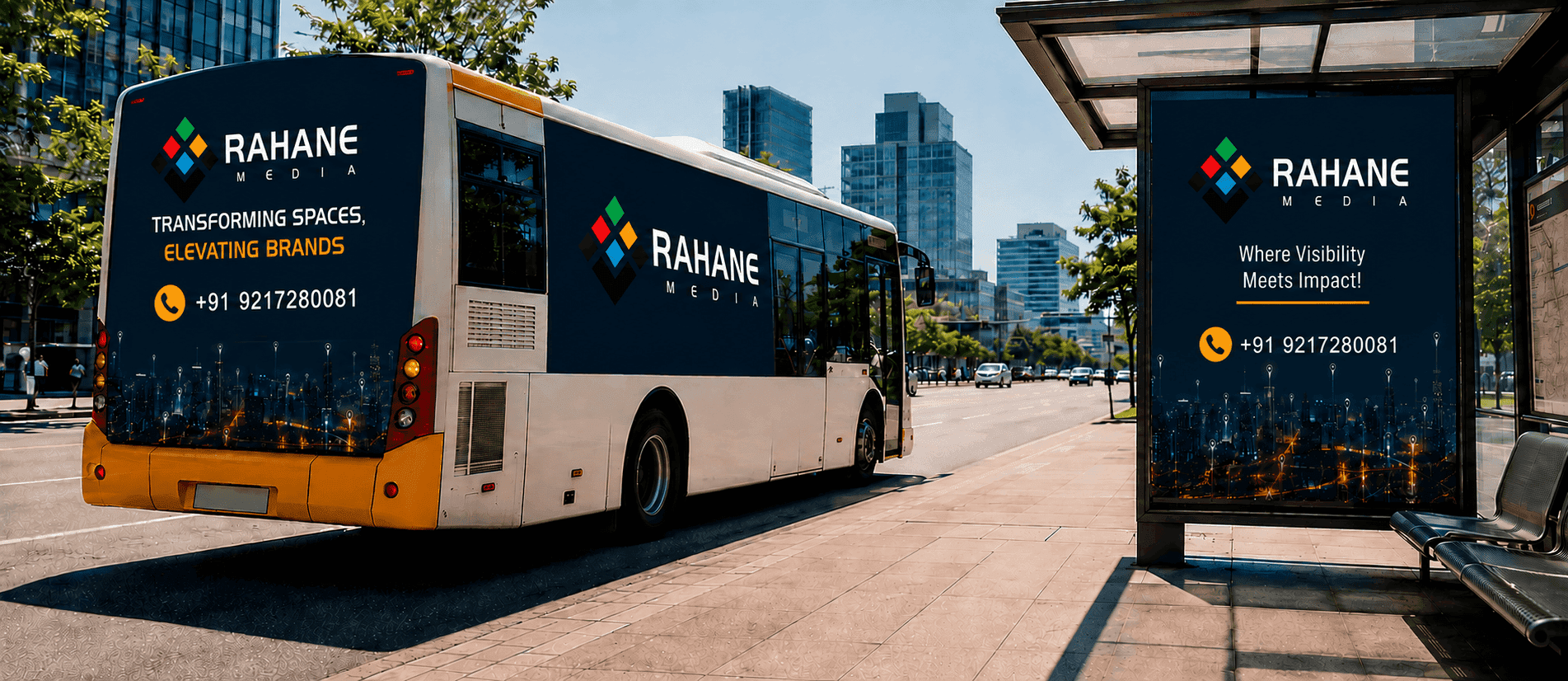
Bus Branding: How to Turn City Streets Into Your Biggest Marketing Opportunity
Instead of placing your brand on another screen, bus branding takes your message onto the streets where your customers already live, work, shop and commute. A branded bus can travel through residential neighbourhoods, commercial areas, business districts, markets and major traffic corridors throughout the day.